


New Face, Same Policy? Dissecting Sanae Takaichi's Economic Vision


Takaichi and Donald Trump at Yokosuka Naval Base in 2025, 28 October https://www.kantei.go.jp/jp/104/actions/202510/28yokosuka.html
Japan recently made history with the election of its first-ever female Prime Minister, Sanae Takaichi. One of the main areas of focus of her campaign was a new economic plan aimed at revitalizing Japan's key industries and enhancing its international competitiveness. But with critics already raising concerns, what exactly does this plan mean for Japan’s future?
The Story Behind the Star
Sanae Takaichi is no political outsider. In 1996, she joined the Liberal Democratic Party, Japan’s ruling party. Over the years, she held various cabinet posts, including the post of the Minister of Economic Security. Before becoming Prime Minister in 2025, Takaichi made 2 separate bids for LDP leadership in 2021 and 2024. She belongs to the party’s conservative wing, emphasizing nationalism, strengthening Japanese defence and military capabilities, as well as a restrictive immigration policy. Her conservative views even earned her the nickname “Taliban Takaichi” among some party members. Regarding her economic views, Sanae Takaich considers Margaret Thatcher a source of inspiration. She promised to continue Abenomics' legacy, focusing on bold governmental spending and investment in strategic sectors.
Not So New Policy
The policy Sanae Takaichi refers to, Abenomics, was initiated by former Japanese Prime Minister and Liberal Democratic Party leader Shinzō Abe, who led Japan between 2012 and 2020. He launched Abenomics at the beginning of his term in late 2012 / early 2013. His economic plan aimed to revive Japan’s stagnant economy after two decades of deflation and low growth. Abenomics consisted of 3 arrows.
The first arrow was the aggressive monetary easing led by the Bank of Japan. It involved large-scale asset purchases from 2013 onward and introduced extremely low and eventually even negative interest rates by 2016. Japan had experienced deflation for more than 20 years, which delayed spending by both consumers and companies, leading to low economic growth, stagnated wages, and debt deflation. The first arrow was aimed at achieving a stable 2% inflation rate. The goal was to weaken the Yen to increase Japanese international export competitiveness. This would make borrowing cheaper, incentivising consumers and companies to increase their domestic spending.
The second arrow was a flexible fiscal policy. It manifested itself through government spending on infrastructure, public works, and stimulus packages mainly between 2013 and 2015. It was viewed as a short-term stimulus to inject demand into the economy. At later stages, it would be combined with attempts to stabilize public finances and control the debt through planned consumption tax increases in 2014 and again in 2019.
The third and final arrow was a structural reform of the Japanese economy and society. It included labour-market reform aimed at increasing job flexibility and reducing lifetime employment rigidity throughout Abe’s tenure, especially after 2014. Other important reforms included increasing women's workforce participation, deregulation, and trade liberalisation. The goal behind these reforms was to improve Japan’s long-term productivity, competitiveness, and growth potential to address the underlying reasons contributing to the nation’s economic stagnation.

Shinzo Abe and John Key, 24 March 2015
Did It Work Last Time?
Abenomics produced mixed results. Abe managed to improve the country's persistent deflation problem, achieving inflation, but it remained below the Bank of Japan’s 2% target. Business confidence also improved as a weakened Yen boosted exports, and unemployment dropped from 4% to 2.4% between roughly 2012 and 2018, during the peak years of Abenomics, one of the lowest rates among all OECD countries. Some structural reforms were enacted, with womenomics increasing female labour participation after 2013 and the Trans-Pacific Partnership liberalising the Japanese economy (negotiated 2015-2016; entered into effect after 2018).
However, Abenomics fell short on some of its key aims. Despite growth in corporate profits and declining unemployment, real wage growth remained weak, limiting growth in consumption demand throughout the 2013-2020 period. Structural reform was underdeveloped as labour rigidity persisted, with 40% of the Japanese workforce being tied to low-paying non-regular jobs. Demographic decline in the form of an ageing population, and some of the regulatory burdens were not addressed. As a result, while Japan’s annual real GDP growth improved from 0.8% to about 1.5% during Abe’s tenure, it was still relatively low compared to other advanced economies. Finally, the stimulus package substantially raised Japan’s public debt burden. At the same time the consumption tax hike in 2014 instead of curbing the rising debt, contributed to a substantial decline in domestic demand. Overall growth seemed tied to the stimulus package rather than being self-sustaining.
The economic reality that Sanae Takaichi inherited from Abenomics is one in which deflation is no longer entrenched, corporate profits are high, and unemployment is low by the late 2010s. At the same time, productivity remains low and wages have stagnated. Debt has risen exponentially while some of the key structural issues were not addressed by the government.
Abenomics 2.0 / Sanaenomics
Sanae Takaichi describes herself as being a successor to Shinzo Abe in terms of her economic policy. She embraces Abenomics’ emphasis on public investment and fiscal stimulus; she has already launched a 23 trillion Yen stimulus package right after taking office. Both Abenomics and Sanaenomics place significant emphasis on increasing corporate profits and domestic consumption by creating favourable conditions for investment and spending.
Despite the similarities, Sanaenomics essentially builds on the economic fundamentals laid by Shinzo Abe; there are still key differences involved in their approaches. In contrast to Abenomics' third arrow, which focused on structural reforms, an arrow that is deemed to have been most poorly realised, Sanae Takaichi places heavier emphasis on targeted investment in national strategic sectors like semiconductors, AI, aerospace defence, and shipbuilding. The idea that Japan faces structural constraints that cannot be solved through stimulus alone. This investment is intended to raise the economy’s growth potential, one of the main issues facing Japan in recent decades. The economic environment has also changed since the launch of Abenomics. Sanae Takaichi acknowledges it herself, stating that ten years ago Japan faced a deflationary program, but now it faces an inflation and weaker currency problem due to Yen depreciation to increase export competitiveness. Furthermore, while Sanaenomics embraces fiscal spending, it also supposedly takes fiscal responsibility seriously to avoid further ballooning of Japan’s debt figures. The rationale being that the stimulus package and specifically strategic investment will increase incomes and make the economy grow, which will help balance out the increased debt figures.
Sanaenomics, in Takaichi’s eyes, is an evolution of Abenomics, trying to avoid some of its pitfalls by being more fiscally responsible while at the same time replacing structural reforms that were never fully implemented with strategic investment in hopes of reviving Japan’s growth potential and escaping low productivity levels.
Ibara no Michi, a Thorny Road Ahead
Sanae Takaichi hopes to fix her predecessor's mistakes and make Japan's economy robust and competitive again. This is crucial for her broader political purposes of countering Chinese influence in East Asia. Takaichi’s economic plans carry some potential. With rising corporate profits and strategic investment in high-tech supply chains and key national industries, there is a possibility of raising the Japanese growth ceiling beyond what previous policies have achieved. With Japan moving from deflation into inflation territory for the first time in decades and low unemployment levels, Sanae Takaichi has a strong foundation for her economic vision, as she is not tasked with crisis management to the same extent that Shinzo Abe was. If used correctly, targeted investment can help Japan escape its low-productivity trap, increasing incomes and achieving a healthy level of domestic demand.
Yet challenges remain that can downplay Sanaenomics. Labour productivity remains low compared to other OECD countries. More importantly, Sanaenomics does not directly address the issue of stagnant wages that have stopped growing despite a continued increase in corporate profits. Takaichi’s political views prevent her from implementing the much-needed structural change that Abenomics failed to achieve. The ageing population, which contributes to labour shortages, can be somewhat alleviated by a more relaxed immigration policy. Yet, Takaichi strongly opposes pro-immigration rhetoric, making adoption of this policy extremely unlikely. The gap between regular and non-regular employment is unlikely to close, preventing wages from rising and trapping millions of Japanese people in low-paid jobs, further limiting domestic demand. Sanae Takaichi promised to take the issue of increased debt seriously. However, if the productivity gains caused by the strategic investment fail to materialise, Japan’s debt-to-GDP value of 230% will only continue to climb further. This is without accounting for the Prime Minister’s plan to increase military spending, which will only contribute to an inflated budget.
Sanae Takachi has an ambitious goal of fixing Japan’s economy and setting it on a self-sustaining path, but her refusal to address structural issues affecting the said economy might result in her falling short of achieving her grand vision of making the nation of the rising sun the most formidable economic and political power in the region.
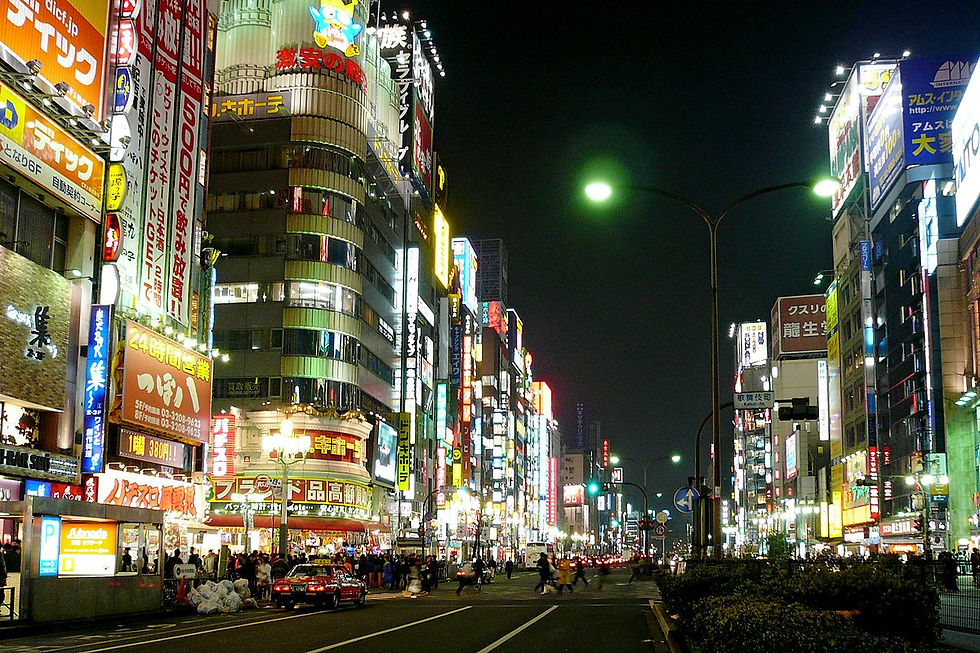
Shinjuku in Shinjuku-ku, Tokyo, Japan


Comments