


For the greater good? Italian exploitation of Veneto

Breathtaking sceneries, deep culture and decadent cuisine all in the same country, in otherwords: Italy. When we think about it, we do not realize how young of a nation it is. In fact, the Italian unification dates back to 1861, only 165 years ago, making it a younger country than the United States. Even though that is the official date, the creation of Italy was an uneven process, with additional annexations taking place up until the end of the Second World War. This is due to the fact that every region has its own history and cultural identity, and even though the common narrative surrounding Italy is one of peaceful mobilization of people wanting to unite under one rule, the sad truth is that in some cases regions were taken under Italian control through military intervention.
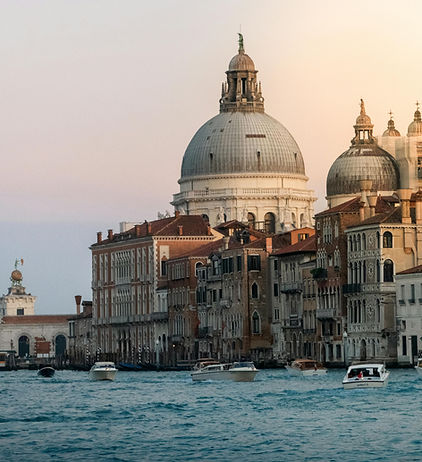
View of Canal Grande, Venice
Paul Bill via Pexels
One of the most common examples is Veneto, a region located in north-eastern Italy. If you are familiar with cities like Venice, Verona or Padua, you most likely know what we are talking about. This region is known in Italy for having one of the strongest independentist movements in the country. Their main claim is that being one of the core contributors to national GDP, fiscal federalization puts a considerable burden on them, as they would be “better off” without the pressure from the central government. The reality is deeper than this. For over a century Veneto has been exploited of its resources in favor of the Italian unification, and the main reason they have not been granted independent status is because of its huge contribution to the economy of the country, despite the fact that a 2017 consultative referendum demonstrated that over 98% of the Veneto population was in favor of greater autonomy from the central government. Why does Veneto have such a strong sense of regional identity? In order to understand that, let’s take a few steps back in history, from the very beginning.
In reality what we know today as Italy is not what was originally envisioned. The majority of the supporters of a creation of one country were from the North West, and their desire was to build a Northern state that could resemble the former medieval Kingdom of Italy. So the nation we know today is nothing but a product of improvised annexations and diplomatic violations. In the Veneto region, after being subject to the control of the Austro-Hungarian Empire, the rural catholic population viewed the Italian Kingdom that had supposedly liberated them with scepticism and hostility, so much so that the annexation to the newly formed nation was followed by the emigration of Venetians, particularly towards south Brazil, due to the poverty caused by the increased fiscal pressures of the new regime. In fact, Italian unification occurred mainly through administrative harmonization, so instead of building a federal state that could be suited to a heterogeneous population, the government extended the Piedmontese law to the whole territory. To create a sense of common identity, Italy selectively denied and appropriated pre-existing traditions of its regions, causing those traditions to lose their original meaning. Even if the unification of Italy was built on values of nationhood and on the fight against military foreign control, it was executed through the imposition of centralism and suppression of regional identities. Sadly, this pattern was destined to repeat itself in the years to come.
Let’s jump around 50 years from Italian Unification to the First World War or, even better, to the end of it. In fact, in the aftermath od the first World War, much of the economic, material and human cost of the conflict was borne by the north east. Ethnic minorities in the area like Trentinians and Istrians were considered “fellow Italian” as a pretext for territorial gains, but at the same time they were denied ethnic and linguistic self-determination. To many Venetians, this seemed like a repetition of the events that took place in 1866: military occupation, economic exploitation, suppression of the local ruling institutions and erosion of the regional identity. In a couple of years, this suppression would become a tool used to standardize the diverse population of Italy. In fact, Italian fascism is a direct evolution of the centralist nationalist project that has been ongoing since unification.
So, how is this still relevant today? Well, we are living in a time when we see with our very own eyes how powerful countries are suppressing smaller ones. However, since the scale of these events is of enormous dimensions, we do not stop to think about whether this could happen within the same country. Surely in the European Union people do not live in a state of war, but oppression can come in many shapes and sizes, so the question we should ask ourselves is: how am I being oppressed by the political framework around me? This is not necessarily a call for action, but being aware of the limitations of our political institutions enables us to point them out and do something about them, to whatever extent we consider appropriate. At the end of the day, Veneto is only one of the many examples…


Comments